Showing posts with label NWA History. Show all posts

Sunday, May 26, 2024

Salvador Lutteroth - Father of the Ten Pounds of Gold

Don Salvador Lutteroth (right), the father of Lucha Libre, with his son Hector (left). Photo from EFE

Salvador Lutteroth (at right in the photo above), the legendary Mexican professional wrestling promoter, was known as "the father of lucha libre." He is also known here at the Domed Globe website as the father of the "Ten Pounds of Gold."

Lutteroth commissioned Mexican jeweler Manual Sabala to make the famed belt for NWA president Sam Muchnick. Sabala is credited for designing the famously familiar "domed-globe" design that was prevalent on so many of the Mexican wrestling championship belts of that era.

Born in 1897, Lutteroth founded the wrestling organization Empresa Mexicana de Lucha Libre (EMLL) in 1933 after first seeing a pro-wrestling exhibition in El Paso, Texas a couple years earlier. That company evolved into CMLL ( Consejo Mundial de Lucha Libre) which combined is the longest running single pro-wrestling promotion in the world.

During his time, Lutteroth was the most powerful man in wrestling in the country of Mexico and one of the most powerful wrestling executives in the world. By 1973, when the domed-globe belt was presented to Muchnick, Lutteroth's son was generally running things in the company and had received NWA sanction for the NWA world welterweight and light-heavyweight championships.  The belt that represented the world light heavyweight title was nearly identical in design to the belt that would represent the heavyweight title in 1973. It is generally thought the world belt was a gift to Muchnick and the NWA from the Lutteroths, as they liked staying in good graces with the NWA president.

His influence on the image of the NWA title is immense. That image still exists today in the modern NWA title belt.

Salvador Lutteroth passed away in 1987.

Paco Lutteroth: https://lastwordonprowrestling.com/2019/07/07/cmll-owner-paco-alonso-passes-away-at-67/


http://www.midatlanticgateway.com/p/ten-pounds-of-gold.html

Saturday, August 20, 2022

Orville Brown and the First NWA Title Belt (1948)

PART THREE IN THE 1948 NWA WATERLOO HISTORY SERIES
by Dick Bourne, Mid-Atlantic Gateway

The NWA's early history with the various belts that represented their world heavyweight title is a bit odd, because even though the organization was formed in 1948, they didn't actually own their own title belt until 1959, as outlined in the book Crown Jewel (available on Amazon and from the Mid-Atlantic Gateway Book Store.) Before that, they used various belts that belonged to others.

In an earlier article, I wrote about my pilgrimage to the Hotel President in Waterloo, Iowa, and the historic events of July 18, 1948 at a wrestling card in that same city.  July 18, 1948, is a day that holds a special place in pro wrestling history, as a group of five Midwest wrestling promoters led by Iowa promoter Paul "Pinkie" George met at the Hotel President to forge the documents that chartered the National Wrestling Alliance. Later that night, they all attended a card at Waterloo's Electric Park that featured a heavyweight title defense by Orville Brown against Joe Dusek, a match which I argue was the first de facto defense of the NWA World Heavyweight Championship.

THE BELT
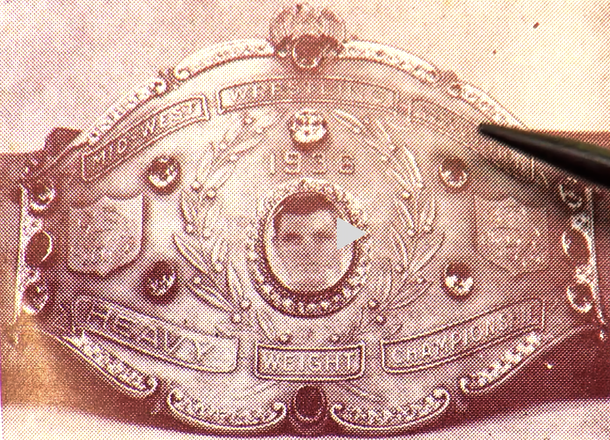
The first belt used as the NWA Heavyweight title belt was actually a modified belt created in 1936 that had been used to recognize an earlier claim to the world championship. It was the Midwest Wrestling Association (MWA) belt, and it was the belt worn into the ring in Waterloo on July 18, 1948 when champion Orville Brown defended against Joe Dusek. Brown was the MWA Heavyweight Champion at that time as recognized by the MWA based in Kansas City. But because of the events at the Hotel President earlier in that day, it was in a practical sense the first defense of the new National Wrestling Alliance title.


Screen capture / pbs.org
 

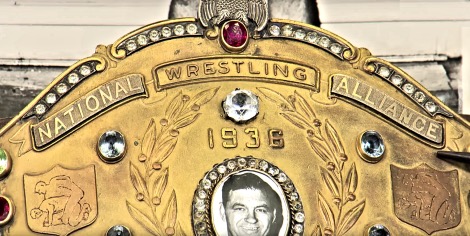
The MWA championship belt (seen in this late 1930s photo above with champion John Pesek's photo) was modified to represent the name of the new NWA organization by placing new plates that said "National" and "Alliance" over "Midwest" and "Association," the the original words cast on the belt.

Screen capture / pbs.org


If you look closely at the image above, you can see the two new National Alliance script plates attached where Midwest and Association were. That's champion Orville Brown's photo in the center oval.

ORVILLE BROWN AND LOU THESZ
Brown wore this modified belt as NWA World Champion until his career was tragically cut short by an automobile accident in late 1949, just weeks before a scheduled title unification match with Lou Thesz, who was also a claimant to the world title out of St. Louis. At that point Thesz was recognized as NWA champion. He began using his own world title belt that he had been presented by St. Louis promoter Tom Packs in 1937 (known commonly now as the "Thesz belt") to represent the NWA world title belt from that point forward. 

The "Thesz belt" was recognized as the NWA title belt until 1957 when Thesz stepped down as NWA kingpin, losing the title to his handpicked successor Dick Hutton. Thesz owned his belt and did not allow the NWA to keep using it as their title belt, taking it with him on tour of the far east. Hutton, known as the champion without a belt, briefly used promoter Al Haft's WLW-TV title belt as his championship belt during his reign. The NWA finally had their own belt made in 1959 (the belt covered in my book Crown Jewel), the first belt the NWA actually owned, presented to then champion Pat O'Connor.


THE 1948 NWA WATERLOO HISTORY SERIES


For more on the Midwest Wrestling Association / National Wrestling Alliance belt, see this feature from the Antiques Roadshow on PBS.
  Thanks to William Murdock for his assistance with this article. And thanks as always to Tim Hornbaker and his book "National Wrestling Alliance."

Sunday, August 14, 2022

Waterloo: The First Ever NWA World Heavyweight Title Defense

PROMOTERS ATTEND CARD OF "NATIONAL IMPORTANCE"
PART TWO IN THE 1948 NWA WATERLOO HISTORY SERIES
by Dick Bourne, Mid-Atlantic Gateway

It certainly wasn't official, but I enthusiastically put forth the argument that the first ever defense of the National Wrestling Alliance World Heavyweight championship was on the very evening following the formation of that alliance.

In an earlier article, I wrote about my pilgrimage to the Hotel President in Waterloo, Iowa, while attending the 2022 Induction Weekend of the Tragos/Thesz Professional Wrestling Hall of Fame. The Hotel President holds a significant place in pro wrestling history.  On July 18, 1948, a group of five Midwest wrestling promoters, led by Iowa promoter Paul "Pinkie" George, met there where they forged the documents that chartered the National Wrestling Alliance. But that wasn't all the group did on that historic day.  

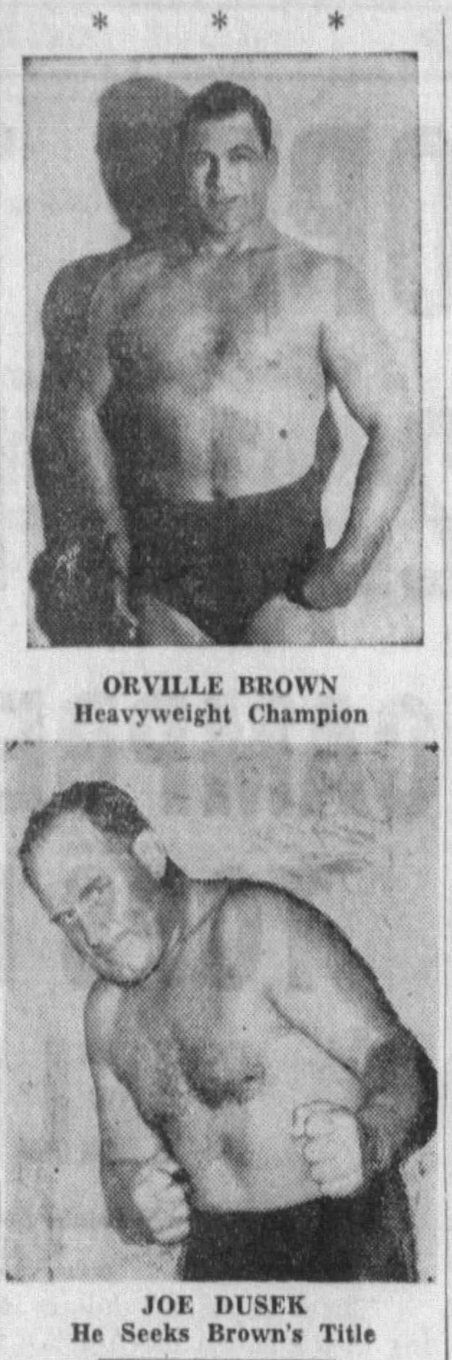
That very Sunday evening, this group attended a wrestling card in Waterloo promoted by Pinkie's brother, Andy George. That card featured a world heavyweight title defense (Midwest Wrestling Association version) by Kansas City's Orville Brown against the top contender, Nebraska's Joe Dusek.  

The Waterloo Courier newspaper had several mentions in the week leading up to July 18 of the gathering to attend the matches at Warerloo's Electric Park, but no mention was made of the real reason they gathered along the shores of the great Cedar River, which was the meeting to discuss forming an official alliance.

SPECIAL GUESTS RINGSIDE
On the Friday before the Sunday wrestling card, the Courier reported that attending the matches would be a group of distinguished promoters including Fred Kohler of Chicago, Pinkie George of Des Moines, Max Clayton of Omaha, Sam Muchnick of St. Louis, George Simpson of Kansas City, and Wally Karbo representing Tony Stecher of Minneapolis. Karbo got a booking out of the trip, too, as the referee for the world title tilt between Orville Brown and Joe Dusek.

As it turned out, Simpson was not at the Waterloo combine, but Orville Brown was. Brown, while as champion, was also a partner in Simpson's Kansas City office. It isn't clear why Simpson wasn't there, but he would later be a signatory at the second meeting of these same promoters in Minneapolis in September.  

Fred Kohler also did not attend due to a prior commitment, but consented to the agreements made that day by telegram.

FIRST NWA TITLE DEFENSE
One of the covenants agreed to at the Waterloo meeting was that the allied promoters would recognize one single world heavyweight champion, Orville Brown. It is fair then to say that Brown's heavyweight title defense that night can be considered the first ever title defense of the National Wrestling Alliance World Heavyweight Championship. It surely was not declared officially as such, but it was - - in essence - - exactly that. The Alliance had been formally founded and Brown had been named its champion only hours earlier. Brown walked into the ring against Dusek that night at Electric Park with the official recognition of the allied promoters as NWA world champion, even if the five people that met earlier in that Waterloo hotel conference room were the only ones who knew it at that point. 

Brown successfully retained his title that night. The undercard included Jr. Heavyweight champion Billy Goelz of Chicago topping Mashall Estep out of Missouri. Otto Kuss of Minneapolis took the opener from Nebraska's Danny Plechas. 

Promoter Andy George had called this event "a card of national importance" in the hype leading up to the July 18 program at Electric Park. Most of that hyperbole regarded the dignitaries attending the world title event. But even Andy was likely unaware of the significance of the main event that night in Waterloo. 


COMING UP NEXT
In my final post in this series, (Orville Brown and the First NWA Title Belt) I'll take a look at the belt that likely was used as the first NWA title belt, modified from the Midwest Wrestling Association belt Orville Brown wore at the time of the chartering of the NWA.

See also: Walking with Ghosts: A Visit to the Birthplace of the NWA
 

* * * * *

BULLDOG PLECHAS
In an unrelated side note, I was delighted to see the name of "Bulldog" Danny Plechas on this card. Pleachas must have been somewhat of a memorable character throughout the years as Blackjack Mulligan would occasionally mention him in his local promos in the Mid-Atlantic area in the 1970s. Occasionally Plechas would sarcastically be included on a list of challengers Blackjack claimed he was willing to face for his U.S. title. Other times he would mention him as someone he'd had a fight with out behind the Mesquite Club at 1:00 AM on a Saturday night. For some reason, I remembered Bulldog Plechas and was happy to come across his name on such a historically significant card, even if the true historical significance really wasn't known at the time.   

*****

THE 1948 NWA WATERLOO HISTORY SERIES

Special thanks to Tim Hornbaker and his book "National Wrestling Alliance."

Thursday, August 11, 2022

The Hotel President

Walking with Ghosts: A Visit to the Birthplace of the NWA

PART ONE IN THE 1948 NWA WATERLOO HISTORY SERIES
by Dick Bourne, Mid-Atlantic Gateway

THE TIES THAT BIND
Waterloo, Iowa, stands as a beacon of history for both amateur and professional wrestling. It is the birthplace of the most famous and decorated American amateur and Olympic wrestler Dan Gable, and is the home of the National Wrestling Hall of Fame Dan Gable Museum. The Dan Gable Museum is also home to the George Tragos - Lou Thesz Professional Wrestling Hall of Fame which recognizes wrestlers with an amateur background that went on to make a substantial contribution in professional wrestling. 


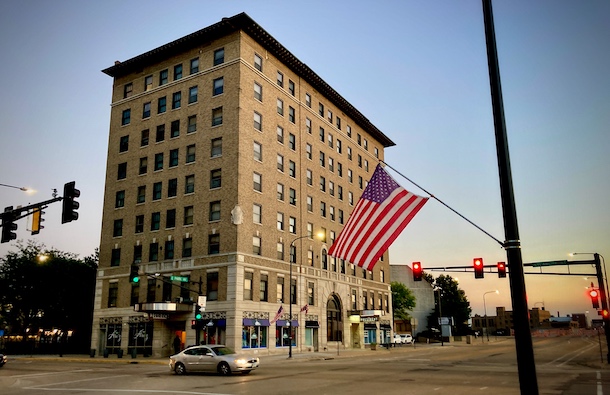
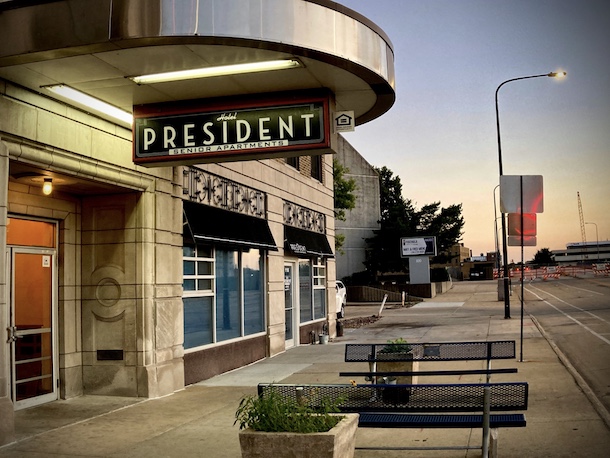
The Hotel President building in downtown Waterloo, Iowa.
Photograph by Dick Bourne


Waterloo is also the birthplace of the National Wrestling Alliance, once professional wrestling's largest coalition of cooperating promoters across the United States and around the world. In 1948, Iowa promoter Paul "Pinkie" George and four other Midwest promoters met in the Gold Room of the beautiful Hotel President in downtown Waterloo and formed the articles that chartered the National Wrestling Alliance. That building, near the banks of the Cedar River, still stands today.


Park Avenue entrance into the Main Lobby of the Hotel President
Photograph by Dick Bourne


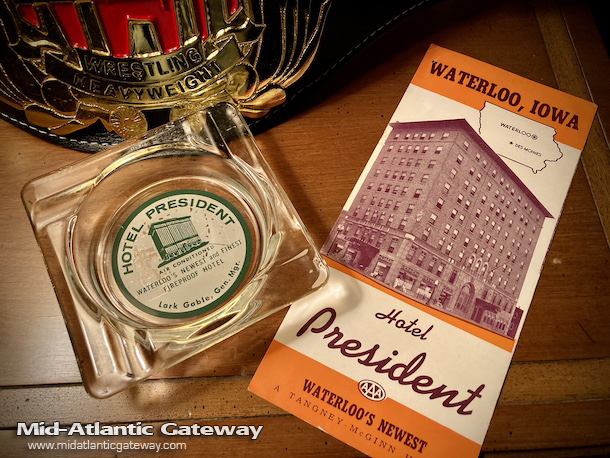
There is an ironic link tying the Hotel President to the Dan Gable Museum, and therefore linking both the amateur and professional sides of Waterloo's wrestling history. The manager of the hotel at the time of the promoter's gathering in 1948 was a man named Lark Gable, who was Dan Gable's grandfather. That unlikely connection just blows me away.


Vintage ashtray and promotional tourism flyer from the Hotel President, both circa 1940s.
Notice the hotel manager's name, Lark Gable, grandfather of legendary wrestler Dan Gable.

Photograph by Dick Bourne


THE FOUNDING FATHERS & THE CRADLE OF THE ALLIANCE

The Hotel President, on the National Register of Historic Places, was built in 1928 and first opened on January 10, 1929. It is no longer a hotel. It has been redeveloped as a federally subsidized apartment complex for senior citizens. Los Angeles based Huntley Witmer, the company that most recently redeveloped the building in 2015, had the wisdom to change the name back to the name of the original building, with restoration of the original lobby, helping to preserve its spot in pro wrestling history, even if that history is largely lost through the sands of time.

The lobby of the Hotel President in the 1940s.
Photo from a vintage promotional tourism flyer.


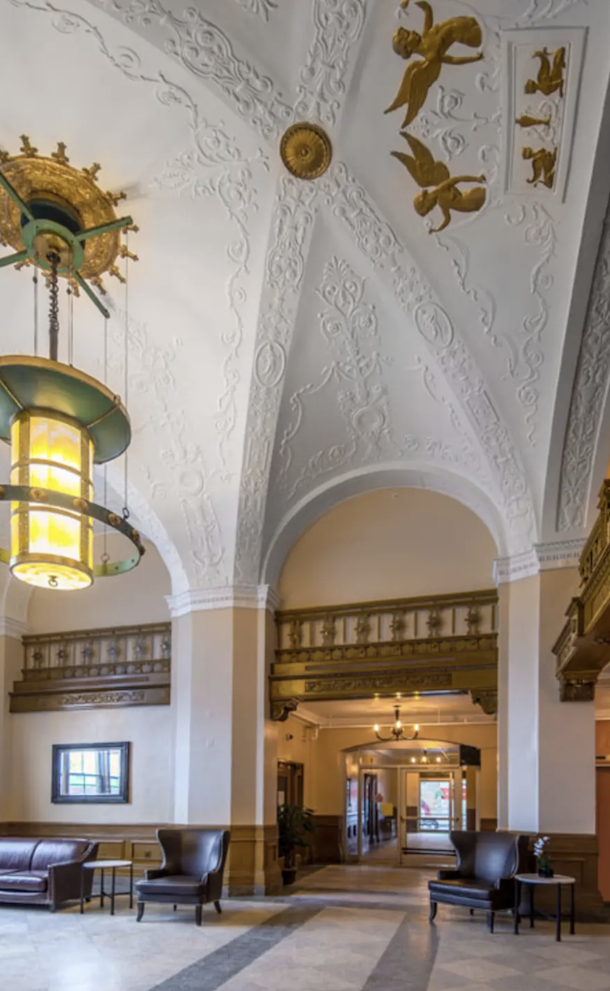
The lobby looks much as it did in the 1940s, with the lobby atrium largely untouched and the wood railing around the second floor mezzanine thought to be original, standing just as it was on July 18, 1948 when the small group of Midwest promoters met there.

Lobby of the Hotel president after 2015 renovations and restoration.
Photo courtesy ApartmentGuide.com


That group in 1948 was led by Iowa sports promoter Paul "Pinkie" George, based out of Des Moines, who organized this meeting and hosted it as well. As a result, he is considered by historians as "the father of the NWA." George was a successful promoter in many different areas, including professional basketball, baseball, boxing, and wrestling. 

Joining Pinkie George that day in Waterloo were:

Max Clayton (Omaha, Nebraska)
Orville Brown (Kansas City, KS)
Sam Muchnick (St. Louis., MO)
Wally Karbo (representing Tony Stetcher, Minneapolis, MN)

Fred Kohler, the promoter in Chicago, IL, was part of the group but did not attend the July 18 meeting, but consented to the agreements made at the meeting by telegram. 

The group voted approval to several statutes, including recognizing one world champion, Orville Brown (who was also the promoter in Kansas City.) Brown is therefore recognized as the very first heavyweight champion of the NWA. (It's worth pointing out that the NWA traces its title lineage from Brown all the way back to George Hackenschmidt in 1905, generally regarded as the first ever professional wrestling champion.)

Sadly, there is no designation or commemoration on the site of this historically significant event that changed the course of pro-wrestling history. I would imagine that not a single person living or working in that building today has any clue of that history. Hopefully, I'm wrong.

WALKING WITH GHOSTS
While attending the 2022 Tragos-Thesz Professional Wrestling Hall of Fame Induction Weekend, I took the opportunity to travel just across the Cedar River to see and photograph the Hotel President. I wanted to get inside if possible, but my first attempt made late one evening proved futile, as all the doors were locked. The next day, I, along with my buddy Matty Montcalm made a second attempt and this time we were able to enter the lobby and make our way up a side staircase that led to the second floor mezzanine and the entrance to what remains of the original Gold Room, where the promoters met in 1948.

Looking out through the doors of the only room left that has a connection to the spot
where the NWA promoters gathered in 1948, across the mezzanine into the atrium
of the Hotel President lobby.

Photograph by Dick Bourne


As we entered that room, walking through the large wooden doors, I will admit I got cold chills, thinking about those five men gathering in that very place and making agreements that would literally change the course of professional wrestling history. it was a cool moment.


COMING UP NEXT
In Part 2 of the NWA Waterloo History Series (Waterloo: The First Ever NWA World Heavyweight Title Defense), I'll take look at the professional wrestling card that took place later that same evening at historic Electric Park in Waterloo. It was attended by the group of promoters who earlier that day formed the National Wrestling Alliance, which made the local news.

 ***

THE 1948 NWA WATERLOO HISTORY SERIES

Special thanks to Tim Hornbaker and his book "National Wrestling Alliance"

Tuesday, August 2, 2022

The Thesz Belt, Awarded in 1937

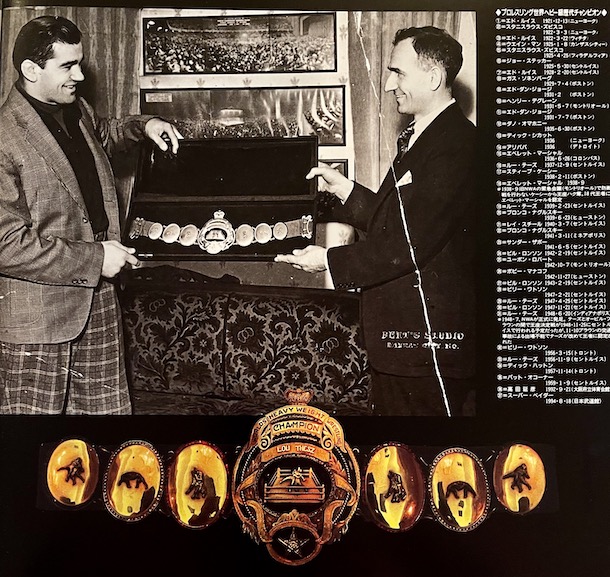
Image from Japanese magazine. Courtesy Bill Murdock.

Above: St. Louis promoter Tom Packs (at right) presents new World Heavyweight Champion Lou Thesz with a new championship belt the morning after Thesz defeated Everett Marshall for the title in December 1937.


The following is an edited excerpt from the book Crown Jewel by Dick Bourne (available via the Gateway Book Store.)

The belt that Lou Thesz wore as World champion until 1957 (when the first NWA-owned World Championship belt was put into service) was a belt Thesz personally owned that came with his purchase of Tom Packs’ St. Louis promotional office in 1949.

That belt is commonly known today as the “Thesz Belt,” named for the man who held the World Championship longer than any other. The belt was presented to him in 1937 by Packs after Thesz defeated Everett Marshall for the World Heavyweight Championship in St. Louis. When Thesz was made champion of the year-old National Wrestling Alliance in 1949, that belt became the NWA’s recognized World Championship title belt, and was so until the Alliance finally purchased and presented a belt of their own in 1957.

The Thesz belt was as much jewelry as it was championship belt. A series of plates held together only by chains, with only short leather attachments at each end to secure the belt around the champion’s waist. It was adorned with jewels. The center plate featured an imperial crown up top, a ring with two wrestlers in the center, and a large oval with a star at the bottom. The belt read “Worlds Heavyweight Wrestling Champion” and had his name “Louis Thesz” made right into the plate. There were three side plates on either side of the center buckle (total of six) that depicted wrestlers in various move combinations.

A 1937 article in the St. Louis Globe-Democrat reporting on the new belt declared that the belt was “studded with 456 diamonds, 176 rubies, and 144 sapphires with six large diamonds in the centerpiece of the seven links.” According to Lou’s friend Koji Miyamoto, it was crafted by a jeweler in St. Louis, who likely made other belts during that era, as Marshall had a similarly designed belt of his own.

Prior to the formation of the NWA in 1948, there were a number of championships around the country recognized as “world championships” going back to 1905 and the days of the legendary George Hackenschmidt, who brought world title recognition with him from various European championships. Several of these U.S. titles were based out of states in the Midwest over these years, including Iowa, Kansas, Missouri, Ohio, Illinois, but also in cities like Boston and Los Angeles.

The title Thesz won from Everett Marshall in 1937 was the Midwest Wrestling Association title, originally based out of Ohio in 1931 and promoted by Al Haft, but by 1937 basically controlled by St. Louis promoter Tom Packs and partner Billy Sandow.

Thesz’s victory over Marshall took place on December 29, 1937 at the Municipal Auditorium in St. Louis, Missouri. The original plan was simply for Thesz to go to a time limit draw or some other disputed finish to allow him to continue his climb in the ranks as a top contender. Promoter Tom Packs saw stardom and box office potential in Thesz and was grooming him to eventually take the top spot. But as Thesz described in his autobiography, when the show nearly sold out in advance weeks ahead of the match, Packs and Sandow re-evaluated their plans. Marshall had not been drawing huge crowds of late as champion, so when the title match with Thesz popped the box office, the plan was changed to put the title on Thesz.

“Deciding the champion was a strictly cold-blooded business decision,” wrote Thesz. “The wrestler who could draw the most money at the gate was the one who got the belt.”

By the time he first became NWA World Champion twelve years later in 1949, he was already a three-time world champion having held different versions of the title around the country. During the next several years Thesz would defeat a number of these other champions to effectively unify wrestling’s World Championship under the National Wrestling Alliance banner.


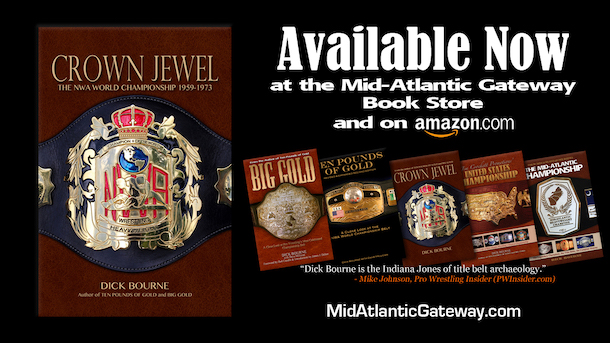
Mid-Atlantic Gateway Book Store

Lou Thesz, Dick Hutton, Pat O'Connor, Buddy Rogers, Gene Kiniski,
Dory Funk, Jr., Harley Race.

The storied history of the NWA World Heavyweight Championship from 1959-1973,
and a look at the belt itself, the "crown jewel" of championship belts.

***************************************

For more NWA History in the mid-20th Century, see also:

THE 1948 NWA WATERLOO HISTORY SERIES
Walking With Ghosts: A Visit to the Birthplace of the NWA
Waterloo: The First Ever NWA World Heavyweight Title Defense
NWA History: Orville Brown and the First NWA Title Belt (1948)


c. 2022 Mid-Atlantic Gateway